At the Microsoft conference in Slovenia

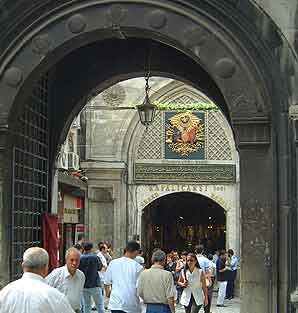
One view from Grand Hotel St. Bernardin in Portoroz, Slovenia

One view from Grand Hotel St. Bernardin in Portoroz, Slovenia

The Slovene driver sped along the autostrade, disco crackling on the radio, fast-chomping gum, taking and making phone calls as if he runs another business. Beautiful coastline, like Italy next door. Construction in progress everywhere. Violet lupine and red-orange poppies brilliant along grassy roadsides.

The driver dropped us at Grand Hotel St. Bernardin in Portoroz. Our suite overlooked the Adriatic from three balconies. I could almost see Venice—or where Venice should have been across the sea.

We were in Slovenia to perform and lecture at Microsoft’s industry conference introducing windows 7. Instead of the usual rushed “play-and-run” routine, we scheduled four days in Slovenia in order to do extra events there, for Microsoft and for ourselves.

As Mac users, we felt like peacocks in a flock of pigeons, but we were quickly proved wrong by many furtive glances of attendees and IT staffers as they peeked at iPhones partly pulled from their pockets.

Like a giant iPhone.

Like a giant iPhone.

First was rehearsal for Bob’s keynote session, open to the conference’s 2,000 attendees. Here was a highlight of the trip for me: an uninterrupted opportunity to play with a Surface Table, aka Big-Ass Table, which sat on stage. Its smooth multi-touch interface allowed me to use both hands to draw and manipulate objects, while Bob and a couple of stage hands simultaneously played on the table.

I’ve been fascinated by the multi-touch user interface ever since I saw Jeff Han’s TED talk —the first TED talk I’d ever seen. (Now I try to watch one or two every night—at least once in a while. I go on binges.) It’s the same technology as CNN’s “Magic Wall,” and FoxNews’ “Bill Board;” like a giant Apple iPhone. Fun to play with.

The Surface table, with technology developed by Jeff Han.

The Surface table, with technology developed by Jeff Han.

The youngest IT staffer I spoke with, 19 years old, confided in me after chatting and playing on the table together.

“I’ve got such a headache,” he baited me.

“Why?”

“I had to load windows 7 on 32 netbooks this morning. Fifteen of them wouldn’t work. I had to take them all apart and replace cables and stuff, then put them back together and reinstall 7.”

Poor boy.

The keynote, scheduled to last two hours, ran an entire hour over. Bob (eventually) shared the stage with Slovene actor and comedian Džuro (somebody help me with his last name). Little video here.

When the whole hotel internet went down during the Microsoft conference, everyone wondered: server overload? hackers? Where’s the IT guy? Booths, demos, work, everything ground to a halt. Embarrassment all around.

30 journalists, Bob Arno, and Ed Gibson.

30 journalists, Bob Arno, and Ed Gibson.

A long interview with the national paper, Dnevnik, resulted in a two-and-a-half page spread we’ve been told reads well. A google translation of the Slovenian turns up some hilarious lines: Reporter: “You can dance monkey dance? Bob: “Whatever Let it be loud and crazy.” Reporter: “Men in adjacent table…has bag at feet. You can steal now?” Bob: “Can.” [and he did] “in 15 seconds… embarrassment evident by redness of face.”

And Bob supposedly said “People like the sheep shearer,” and later: “Ah, no. Not like this, as we are now. You should fuck in you or something.”

Remember the children’s game of telephone, or operator? Well, call this translation. From Bob’s Swedish to his English, from the reporter’s English to his Slovenian, and finally through Google’s processor.

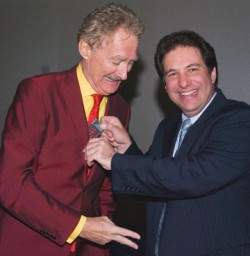
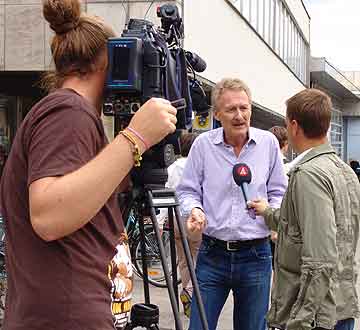
Microsoft had arranged for Bob to appear at a press conference with its chief security analyst, Ed Gibson. When asked about some of windows 7′s new security features, Gibson quipped: “I’d demonstrate for you, but we don’t have two hours for windows to boot up.” I wouldn’t repeat that had Mr. Gibson not said it to 30 journalists. Short videos here and better, here.

Campari aperitifs at Italian happy-hour.

Campari aperitifs at Italian happy-hour.

Duties done, we drove to the Italian city of Trieste, just half an hour away, for sunset cocktails on the piazza. Campari aperitifs are de rigueur, as are cigarettes. (We stuck with just the cocktails.) We got a table before the joint became standing room only. Utterly pleasant, and time for passeggiata afterwards, in the right mood.

Piran: reminded me of Venice

Piran: reminded me of Venice

Despite my sarcasm, I want to emphasize that Slovenia is a lovely destination. The country’s terrain is beautiful, as are it’s coastline and views. We walked to Piran, the nearby town, which resembled Venice without the canals, crowds, or cruise ship passengers, and possibly lacking a fraction of the charm.

We found our hotel’s massive restaurant dismal and oppressive with overly formal appointments and stuffy service. Heavy curtains and high window sills obstructed a gorgeous view; and given the glorious weather, the windows should have been open. Fake plants are a turn-off.

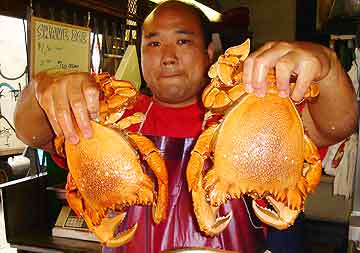
Fresh, simply-cooked bounty of Slovenian seafood.

Fresh, simply-cooked bounty of Slovenian seafood.

But nearby Barka restaurant, on the harbor, was perfect in every way: patio, menu, views, quality, good Slovenian wine, and a casual-but-correct wait staff. Once we discovered it, we returned for every meal.

Leaving out of Trieste airport, a huge 20-minute-storm cancelled our flight. Waiting in the airport restaurant until an evening flight, we watched three armed policia step up to the bar for drinks.

At the end of this trip, having visited Italy, Slovenia, and Paris, we returned home with no stamps in our new passports. Perhaps these will last longer than the previous ones did.
© Copyright 2008-2009 Bambi Vincent. All rights reserved.

Unrelated posts:

Eat shit

dung-on-tongue

Mala Mala, South Africa— Our mischievous rangers convinced some in our safari group of an old “African tradition” while out walking in the bush. It is a competition to see who can spit impala droppings the farthest. I was horrified to see first one sister,
impala-dung-j

then another,
impala-dung-s
select a hard bead of deer doodoo from the ground and place it on her tongue. Who cares how far they spit it? Two of my sisters voluntarily put animal dung in their mouths! Granted, it was hard and dry, but it was on the ground! These two squeamish ones are the type who avoid touching banisters and public doorknobs.

Meanwhile, we all ate caterpillar droppings,
caterpillar-droppings

which seasoned our alfresco breakfasts, lunches, and dinners. The stuff fell so steadily from the trees it was useless to fight it. It lodged in hair, tickled down shirts, filled pockets, and sunk to the bottom of our coffee.

mala-mala-breakfast
“It’s just digested leaves,” our entomologist uncle soothed. Look at the dung beetle: it lives on pre-digested food. Here it works hard to roll perfect balls of fresh elephant dung for later consumption.

dung-beetle

© Copyright 2008-2009 Bambi Vincent. All rights reserved.

Unrelated posts:

Observations of Japan

japanese-jugs

Just back from Japan with a few shallow thoughts:

I like the Japanese philosophies of beauty and simplicity, love the food, but can’t get used to the unquestioning, obedient nature of the people. Or that all answers are “yes,” even when it means “no.”

High-tech toilets: I like having a warm seat and a control panel. The electronic sound effects are annoying—fake waterfall or babbling brook sounds. The bidet/washing features are—um, too personal for comment.

Steam draws me, always.

Steam draws me, always.

I appreciate super-fast Asian internet, but my hotel wifi ate a bunch of my outgoing email without telling me. I prefer slow and reliable.

Cherry blossoms make up for the gray, cold, windy, rainy, dreary weather on the March/April cusp.

Yokohama has no trash cans. None. After I needed one, I kept looking the rest of the day as I crisscrossed the city. I never found one. Yep, there was a little trash on the ground, but only a little.

Natto beans with mustard, ready to top rice.

Natto beans with mustard, ready to top rice.

Breakfast: a bowl of rice with 30 different garnishes, 30 different ones every day. Wonderful. The one constant: natto beans, the love ‘em or hate ‘em fermented beans with a strong ammonia fragrance, which you whip up into a froth of snotty, stringy, viscous liquid, not unlike the stuff okra oozes. When you eat natto beans, the stuff loops from the chopsticks in long, fine, spiderwebby strings that stick to your chin and do feel like actual spider webs a minute or so later when dry.

Astonishing and confounding, how little English is spoken in Japan, including by the young people. What English exists is often amusing. The woman who was assigned to translate our presentation spoke to me beforehand and, pointing to a bald man, innocently called him a skinhead. I saw shops called “Junk Jewels” and another, “Junk & Antiques.” There’s a chain of mini-markets called “Sometimes Fresh.” Passed the “Pay Up Hotel.”

Pocari Sweat, available on every street corner.

Pocari Sweat, available on every street corner.

If you’re thirsty on the street, you can stop at a vending machine and buy a bottle of “Pocari Sweat.” Vending machines also sell “Full Supporty” stockings, and tickets for full, hot meals, chosen by plastic display and then picked up from a cook nearby with never a word spoken.

Some very tall pine trees looked like cellphone towers.

A digital sign in front of a tollbooth showed an animated cartoon man waving a flag back and forth.

I’ve been to Japan quite a few times. These thoughts are not cumulative, but specifically from this visit.
©copyright 2000-2009. All rights reserved. Bambi Vincent

Unrelated posts:

Necessity is the mother of…

iron-headon

Coogee Beach, Australia—From our hotel, we walk around the corner to The Globe for “brekkie” every morning. We’re regulars on the stools at the open windows. We order a “tall black” and a “flat white.” Coffee. The Globe serves toasted fruit loaf, slices of a dense loaf packed with dried apricots, figs, dates, currents, and raisons. They toast it properly: dark so it’s as black as its poppy seed crust.

Earlier, I had seen a fruit loaf in a tiny market just across the street; the poster advertising it made me drool. It was called Dallas Fruit Loaf. I asked The Globe’s waitress if their fruit loaf was Dallas. She didn’t know. Anyway, it’s delicious.

One day they didn’t have the fruit loaf. I ordered the “full brekkie,” which Bob gets, and I was sorry. Next day, The Globe was still out of fruit loaf. “But I found out, it is Dallas,” the waitress said. “If I go and buy a loaf, will you toast it for me?” I asked her. “With pleasure,” she said.

So I ran across to the little market and bought a Dallas fruit loaf. The Globe’s waitress toasted three thick slices for me and served it on a plate with a crock of butter. I took the rest of the loaf back to the hotel.

Dallas-fruit-loaf

Dallas-fruit-loaf

iron

But how will we toast it, Bob and I wondered. It’s soooo delicious toasted! I thought about what we had in the room. We can steam it with our clothes steamer to make it damp, then let it dry out and get hard on the outside. Then we can heat water in the coffee pot and set a cup of hot water on the toast to warm it. No. We can put a slice in the trouser press! Set the timer for 30 minutes… slow, but it might work. What if we forget the bread in the trouser press, Bob wondered. Okay, never mind.

Later, Bob went out for a take-away Thai lunch. I stayed on our balcony and ate an apple. And a slice of Dallas fruit loaf. Toasted.

Yes—I remembered what else we had in our room. An iron!

Why not? It’s teflon coated. I tried just a corner first. The iron wiped clean on a towel. Who needs butter?
©copyright 2000-2009. All rights reserved. Bambi Vincent

Unrelated posts:

Singapore ice cream

Ice cream sandwich, Singapore-style

Ice cream sandwich, Singapore-style

What sounds more scrumptious that “bread ice cream?” Scallion pancakes, Dutch waffles, and durian come to my mind, along with a hundred other street foods.

The lines are long though, at the bread ice cream carts on the streets of Singapore. For a few cents, you get a scoop or a slab of neapolitan ice cream between two slices of soft white bread. Only—the balloon bread is green and pink.

Bread ice cream, Singapore street food

Bread ice cream, Singapore street food

I’d choose bread ice cream over fried grasshoppers, for sure. But it’s nothing like the wonderful Turkish ice cream. And Turkish ice cream comes with entertainment.

©copyright 2000-2009. All rights reserved. Bambi Vincent

Unrelated posts:

Suckers, high and dry

A beheaded octopus drying in the Greek sun.

A beheaded octopus drying in the Greek sun.

I can’t remember ever having eaten dried octopus, but I’m not saying I wouldn’t. There they were, looking festive, a row of fresh ones dangling decoratively from a boat’s rigging, like signal flags spelling out a message for dinner.

In Mykonos recently, on a long stroll along the shore, I saw these plump babies strung up, baking in the Greek sun. They had clearly protested their ignoble attachment to a laundry line, given that more than a few had clutched a lifeline with defiant fists.

A boat flies signal flags that spell out dinner.

A boat flies signal flags that spell out dinner.

Octoperson

Octoperson

The sticky-fingered cephalopods had received the ultimate capital punishment—beheading—and for what? Stealing bait? Like a lowlife pickpocket going for our prop wallets, except we throw them back.

Maybe they weren’t destined for food, I don’t know. I’m not one to look at tentacles and think mmm, succulent. There was no one to ask.

Me, I’d put light bulbs in them.

©copyright 2000-2009. All rights reserved. Bambi Vincent
100pxl-white
100pxl-white
100pxl-white

Unrelated posts:

Mumbai

Streetside barbers in Mumbai\'s blistering noon sun.

Streetside barbers in Mumbai's blistering noon sun.

I feel like celebrating Mumbai, a city I love to visit.

I’ve stayed in the Taj Mahal Hotel a couple of memorable times and looked out my window at the iconic Gateway to India monument. Looking down from my window at dawn, I watched men squat with tiny coal fires in tin cups, ready to cook a little breakfast for passersby. Or for those waking from a night’s sleep on the plaza. Entire lives are lived out on the Mumbai streets.

At a tea stall in the Colaba district, the chai-walla pours boiled milk onto tea leaves and spices.

At a tea stall in the Colaba district, the chai-walla pours boiled milk onto tea leaves and spices.

Mixing the masala chai as it steeps.

Mixing the masala chai as it steeps.

After my first and second visits in the comforting embrace of the grand Taj, Bob and I chose more intimate Indian hotels in the Colaba area. Less quality control, more flavor! The neighborhood is a congested, confusing warren of small streets that run into the slums Mumbai is famous for, the kind you can walk in and start a parade of the curious and friendly, not beggars, just those smiley-shy children and adults who want to see what you’re going to do and why.

Tea leaves and spices are strained out with a cloth.

Tea leaves and spices are strained out with a cloth.

We got into the habit of buying milky masala chai from a stall near our hotel. The tea-walla always opened a new container of milk and boiled it while we waited. To his generous handful of tea leaves, he added his own mysterious mixture of “warm” spices: cinnamon, clove, cardamom, allspice, black pepper. When the tea was brewed and strained, he poured it into a take-away plastic bag, and off we walked with it, to drink in the mugs in our room.

We’ve had a few meals at Cafe Leopold, too, my favorite of which included curried eggs. Anybody who’s read Shantaram knows that Cafe Leopold is an institution central to social life for expats, locals, and tourists. It’s where the sunny and the shady commingle, knowingly or not.

Tiny cups of masala chai are readied for delivery.

Tiny cups of masala chai are readied for delivery.

For a deep look at Mumbai and all things mafia, which is to say all things Mumbai, read Maximum City: Bombay Lost and Found, by Suketu Mehta. Or better yet, visit the city and see for yourself.

A fruit-walla too busy to swat flies.

A fruit-walla too busy to swat flies.

Unrelated posts:

Michael Pollan’s sun-food agenda

Michael Pollan. Photo from Wikipedia.

Michael Pollan. Photo from Wikipedia.

Last month in the New York Times, Michael Pollan wrote an open letter to the president-elect about the importance of revising our entire food policy. It’s a long letter, but I highly recommend it.

You can read his letter in The New York Times or on Michael Pollan’s website.

You can listen to Terri Gross interview Pollan about his letter on her NPR show, Fresh Air. It’s 40 minutes long.

Or you can download an MP3 of my computer reading Pollan’s letter. It’s 52 minutes of robot speech; a bit unpleasant at first, then no more irritating than reading text in a bad font. Not nearly as bad as reading reverse text (white text on a dark background). Listen carefully and you can even hear the robot take a breath at the beginning of sentences.

I’m trying to make it easy for you to ingest Pollan’s article.

After cars, the food system uses more fossil fuel than any other sector of the economy … chemical fertilizers (made from natural gas), pesticides (made from petroleum), farm machinery, modern food processing and packaging and transportation … [W]hen we eat from the industrial-food system, we are eating oil and spewing greenhouse gases. This state of affairs appears all the more absurd when you recall that every calorie we eat is ultimately the product of photosynthesis — a process based on making food energy from sunshine. There is hope and possibility in that simple fact.

Calves ready for shipping by sea.

Calves ready for shipping by sea.

Besides reverting to old-fashioned, clean, solar-powered farms, Pollan wants to see healthful food made affordable, nutrient-free junk food such as soda lose its “food” status, diversity in agriculture, crop rotation, feedlots opened up to the pastures, and much more.

Pollan’s core message is this: “we need to wean the American food system off its heavy 20th-century diet of fossil fuel and put it back on a diet of contemporary sunshine.” He acknowledges that this is a complex and gargantuan task. He has explanations and ideas for every aspect of feeding America, starting with the Farm Bill and ending with family dinners. It’s hopeful, and hopefully practicable.

Pollan questions some of the wacky food things we do now, such as shipping American raised salmon and chicken to China for cutting up, then shipping the raw stuff back to the U.S. to sell. And he’s got a few wonderfully wacky ideas of his own. For example, he’d like to see the White House front lawn replaced by a produce garden, the excess of which should go to a local food bank. And perhaps forgive culinary-school student loans if graduates cook and teach in public schools for a spell. And committing the White House to one meatless day a week which, he says, if all Americans did would equal taking 20 million midsize cars off the road for a year.

A bull roasting.

A bull roasting.

In his Fresh Air interview, Terri Gross asks Mr. Pollan if he heard from a representative of either candidate after the publication of his article. No, he answered, except that one of the campaigns’ transition teams (unnamed) asked if Mr. Pollan could provide a one- or two-page summary for them. He refused, saying “the reason I wrote 8,000 words is because that’s what I needed to tell the story. If I could have written it in one or two pages, I would have.”

Barack Obama refers to Pollan’s article in an October 18, 2008 interview for Time magazine and appears to take the issues to heart. Good sign. We’ll see.

Michael Pollan has been one of my favorite food writers since I read his article Power Steer in 2002. Now I urge you to read Farmer in Chief.

Unrelated posts:

Paper masala dosa

Paper masala dosa: crisp and light as air, except for it\'s full middle.

Paper masala dosa: crisp and light as air, except for it's full middle.

Why did we order two?

Paper dosa is one of my favorite meals. I order them at every opportunity when I’m in India, Singapore, or Dubai. It was a restaurant in Phoenix, though, where I was served the biggest one I’d ever seen.

Dosas are hard to find in the U.S., but I discovered Udupi in Phoenix, where they serve 17 kinds. 16 kinds I don’t care about. It’s paper masala dosa, every time. I dream of its shiny mahogany surface complete with streaky tracks from the dosa-maker’s spatula, the intoxicating fragrance of ghee, and the traditional accompaniments. I like the drama of its arrival, even when it isn’t this gargantuan; even when I fetch it from the grill myself. And I like the eat-it-while-it’s-hot urgency, even though it’s impossible to eat it while it’s hot.

Paper dosa is a thin, crisp pancake made from a fermented batter of rice and lentil flour. They’re always large, but I’ve never before come across the three-foot long version. Then again, I’ve never before been to Udupi—the restaurant, or the city in southern India.

A giant version of the paper dosa, with its three little bowls of accompaniments.

A giant version of the paper dosa, with its three little bowls of accompaniments.

A paper dosa always comes with a little bowl of sambar (a thin tomatoey broth) and two fresh chutneys. Indian chutneys are not the sweet-hot preserved fruit bits in jars, as sold in U.S grocery stores. Those are “pickles.” Chutneys are fresh. With a paper dosa, you get one of ground coconut mixed with chilies and fresh green coriander or mint leaves, and one other, complimentary chutney (the kind varies).

The paper dosa is cooked on only one side, with ghee (clarified butter). A hidden surprise of potato curry lies within.

The paper dosa is cooked on only one side, with ghee (clarified butter). A hidden surprise of potato curry lies within.

If you order paper masala dosa, your dosa is rolled around a ladle of potato-onion curry, and the meal becomes hearty. They are always too much for me, but this one was amusing in its hugeness. It was no joke, though.

Indian restaurants are everywhere now; unfortunately, they all seem to have the same predictable menus: butter chicken, chicken tikka, lamb korma, beef vindaloo, aloo gobi… They’re all north Indian restaurants and they all must use the same boring, failsafe recipes. If you’ve never had the cuisine of south India, it’s worth seeking out. You’ll get dosas (maybe 17 kinds!), other unfamiliar crepes, pancakes, and “donuts,” and dishes rich with coconut and chilies.

Udupi Cafe
1636 N Scottsdale Road
…¨Tempe, AZ 85281 …¨
Phone: 480-994 8787

Unrelated posts:

Kevin Mitnick redflagged

Bob Arno and Kevin Mitnick.

Bob Arno and Kevin Mitnick.

At the Atlanta airport last week, a limo driver stood holding a sign marked “Bob Arno.” Next to him stood another driver holding a sign marked “Kevin Mitnick.” You remember Kevin Mitnick, the young hacker imprisoned for five years, released in early 2000. Remember the “Free Kevin” campaign? The guy who popularized the term “social engineering”? Kevin calls himself a non-profit hacker, since he hacked into computer systems for the fun and challenge, and gained nothing of significance.

We knew Kevin would be in Atlanta—we were all there to present at ASIS, the huge security industry conference. But Kevin was flying in straight from a job in Colombia, so we didn’t expect to arrive in sync.

First we social-engineered his driver to learn where Kevin would be staying. Same hotel as us. Then the chatty driver said that Kevin had been due in two hours ago. Huh. We left a note with the driver inviting Kevin to dinner later and left.

The airport parking attendant held us hostage. Our driver had given him the parking ticket, but he wouldn’t raise the barrier to let us pass. Something was wrong with his computer, he said. We waited. After five minutes, we requested our ticket be returned so we could go to one of the other booths, which were all empty. No car was behind us, either. The attendant refused. Bob got out of the car and demanded the ticket back, fed up with our driver’s polite style of dealing with this ticket moron. No luck. The man kept his head down in his glass booth, impervious. Neither logic nor threats worked, and it was twelve minutes before we were allowed to exit the airport parking.

We caught up with Kevin several hours later, and he told a hold-up tale that made thoughts of our little delay evaporate completely. U.S. Customs had detained him and questioned him about his many trips to Colombia.

“I have a girlfriend there,” Kevin said.

“Have you ever been arrested?”

“Yes.” Kevin couldn’t lie to federal agents.

“What for?”

“Hacking.”

“Were you hacking in Colombia?”

“Yes, but that’s my job. I was hacking for a company that hired me, to see if their system is secure.”

As Customs officers began examining Kevin’s luggage, his cell phone rang. It was his girlfriend in Bogota, hysterical. Meanwhile, an officer lifted Kevin’s laptop. Kevin wasn’t concerned about it. He routinely wipes his hard drive before crossing borders, shipping an external drive containing his data to his destination. Everyone in the field of information security knows the Department of Homeland Security’s new policy:

Federal agents may take a traveler’s laptop or other electronic device to an off-site location for an unspecified period of time without any suspicion of wrongdoing, as part of border search policies…

“FedEx called,” the girlfriend said in her poor English, “they found cocaine in the hard drive!”

Kevin’s face went white and was instantly drenched in sweat. He wondered who could have put cocaine in his hard drive: his girlfriend? the packing/shipping storefront where he dropped it off? He assumed, understandably, that the hard drive seizure somehow prompted this Customs search.

“What are you doing here in Atlanta?” the Customs officer demanded.

“Speaking at the ASIS conference, moderating a panel on internet abuses. Here, I’ll show you.” He took the laptop and launched Firefox, intending to open the ASIS keynote web page. First, he hit “clear private data” and glanced at the officer, who instantly realized his own stupidity. The officer snatched back the computer.

HID card spoofer.

HID card spoofer.

Other officers pulled suspicious items from Kevin’s bags. Out came another laptop, which they started up, thinking they’d found gold, unaware that they’d need a password and dongle to access the real guts of that machine. Then they pulled out a large, silvery, antistatic bag and extracted its weird contents.

“They thought they found the mother-lode,” Kevin told us, able to smile in retrospect. And we could imagine why, looking at the thing.

“What’s this, huh?” the agent smirked. Like, how are you going to explain this one away? We gottcha now!

“It’s an HID key spoofer,” Kevin explained to a blank face. “Like your ID card there. You just wave your card at the door to go through, right? I just need to get close to your card and press a little button here. Then I can go through, too. This thing becomes a copy of your card key.”

“Why do you have it?” the officer demands accusingly.

“Because I demonstrate it at security conferences like ASIS.”

Somehow, Kevin kept his cool throughout four hours of grilling. When he was finally allowed to use a phone, he called an FBI agent who was to be on the panel he’d be moderating, and the FBI agent cleared him.

Having lost so much time, Kevin declined our dinner invitation, since he needed to prepare for his presentation. After listening to his long tale, Bob and I headed out to dinner alone. We found the French American Brasserie—quite worth raving about. http://www.fabatlanta.com/ Although we both ordered moules marinière, hardly a test for a brasserie, we enjoyed the meal thoroughly, along with the decor, ambiance, and service.

Kevin had been red-flagged, of course. He found out later that Customs knew nothing of the cocaine in his hard drive. He also found out that there wasn’t any cocaine in his drive. There may have been a few grains on the outside of the package, but it came from Colombia, right? Still, the drive had to be ripped open to determine that it was drug-free, and it wasn’t clear whether or not the disk itself had been damaged.

Unrelated posts:

Airport observations

View from the lounge.

View from the lounge.

So many airport ticket agents spend their work hours in terrible environments. In particular, I notice the noise level. Baggage belts and security scanners can be deafening, and they are constant. Screeching security door alarms and PA announcements add additional layers of racket.

I’m amazed at how little attention is paid to the sound of things, especially things that people have to work with day in and day out. Airports have a lot of these sounds. I guess it’s assumed that the target market passes through these irritations briefly and seldom, making them ignorable. But what about frequent flyers, like me, and airport employees?

Tired travelers in terminal misery.

Tired travelers in terminal misery.

Take the electric carts that carry late, handicapped, tired, or overburdened people to and from the gates. Some carts are silent, but in some airports, they beep with a piercing insistence whenever they are in use. Those poor drivers! Inter-terminal trains and trams: some, such as those at McCarran Airport in Las Vegas, beep-beep-beep blastingly to signal the approach of the next tram. At the gates, jetway doors shriek shrilly when opened, or when they simply misbehave. And the sound I most dislike? TSA employees who pace the security line and shout orders like boot camp drill sergeants. I spend a lot of time in airports, so I have time to notice these things.

Alaska Airlines notices, too. The company provides custom earplugs to its flight attendants (though not free—they pay half). The earplugs are individually molded to their ears and muffle the engine roar while allowing them to hear voices. Wonderful. Yet, only half the airline attendants were wearing them, on the recent flights I took.

At the other extreme, Air Canada forced me to remove earplugs during takeoff and landing. “It’s a Canadian law,” the flight attendant said.

There’s a funny sign at the international terminal at McCarran Airport in Las Vegas: “No liquids or snow globes past security.”

I love the various scooters employees zip around on in Scandinavian airports. The police use Segways at O’Hare.

Unrelated posts: