About Bambi Vincent

I hunt thieves. I film them, interview them, write about them, and teach how to avoid them.

An opportunist pickpocket—part 1

Pickpocket Plaid

La Rambla, Barcelona—On one crowded summer Sunday, Bob and I patrolled the perimeters of the street performers’ audiences. Of all the thieves and con men we watched that day, and there were many, “Plaid Shirt” was the slickest. I locked onto him because of his smile.

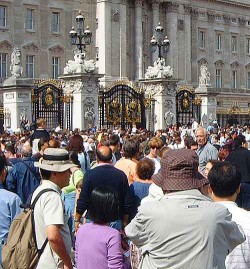
A Spanish folksinger had attracted an audience of hundreds. Backpackers were camped long-term on the ground, and people stood four and five deep behind them in a giant circle, enjoying the free concert.

Plaid Shirt was neatly dressed and I almost eliminated him on the basis of the thick wallet in his back pocket. His gray plaid shirt tucked into dark blue jeans did not grab my attention. The windbreaker he carried over his arm was a tip-off, but not a dead giveaway. I had considered a sweater myself that morning, and wished for one in the evening.

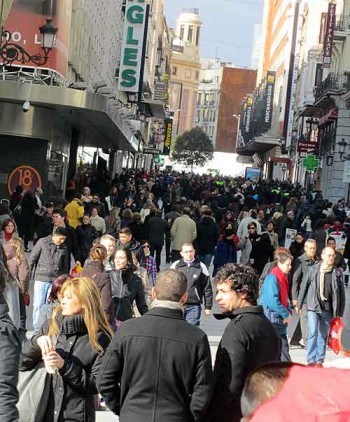
Plaid in a crowd

Can you identify the pickpocket in the crowd?

What raised my antennas was his behavior. Plaid Shirt sidled up close into the back of the attentive audience. After a minute, a man beside him turned and glared at him. My suspect smiled in response and took half a step back. But that smile! It was the paradigm of shit-eating grin.

Plaid Shirt slowly and calmly relocated, pressing himself into another section of the crowd. He did this repeatedly, never staying more than two minutes in one spot. I tagged onto him, stepping right in behind or beside him. Whenever he turned to leave, I swiveled away or moved in the opposite direction.

Plaid gets a long, hard look

Later Bob joined me with his camera. Plaid continued his pattern of getting close, then backing off. When he was glared at, he proffered his cat-ate-canary grin; but more often he was not noticed at all.

Round and round the periphery we went. After Bob got some footage of Plaid, I moved even closer and learned his secret specialty. With absolute stealth and fingers like feathers, Plaid lifted the flaps on men’s cargo pockets—those low-down side pants pockets—and unbuttoned them. Despite his use of a jacket for cover, I saw him unbutton three cargo pockets and one hip pocket, on four men. He probably opened many others I couldn’t see.

I did not, however, see him steal any wallets.

Why did he leave each mark after only opening the button? Did he sense the men had felt him? Was he just setting up for a later approach? Most of his targets seemed not to have sensed anything amiss.

Amazed that he hadn’t wisened to me, I began to think of Plaid as a hapless fool. We’d circled and circled the audience together, moving in, pausing, moving on. For forty-five minutes I followed the pickpocket’s balding head while he failed to notice me. With my bright white dress and big curly hair, it’s not as if I were totally inconspicuous. If he’d gotten anything, he would have left, at least long enough to dump the leather.

Plaid gets another glare.

Meanwhile, Bob dared not get close, although he may as well have. Plaid was concentrating so intently he wouldn’t even have noticed a six-foot-five videographer hovering over him. But Bob hung back while Plaid and I traced a flower-petal design around the hand-clapping fans, curving in and out at irregular intervals.

Plaid moved in behind a man with a child balanced on his shoulders. The man swayed gently with the music and the child tapped her thigh. Plaid lowered his jacket and positioned his body, attempting to block sight lines. I snuck in closer, in time to watch Plaid lift the flap of the father’s cargo pocket, and slowly open the button. I motioned for Bob to come near. This was a good opportunity with enough of a view.

Plaid worked meticulously. Stealth was his main operative, with nerve and patience tied for second and a goofy smile his ace in the hole. He kept his face forward and head straight; only his eyes flicked down now and then. Father and child were oblivious. The music swelled.

Plaid took a half step away. No reaction from the mark. He moved back in and lowered his jacket again. Bob slipped up behind me and I edged away, letting him have the sightline. In the background now, I went crazy not knowing. Was Plaid extracting the wallet? Was Bob getting it on camera? What would we do afterward: alert the father or try to talk to Plaid? I crept up, trying to see.

Interruption!—

Have I described La Rambla’s comical chair patrolman? He controls the rows of chairs on the upper end of the boulevard, collecting a few coins for the privilege of resting tired feet in prime people-watching seats. With his many-pocketed vest, visor cap, and change-purse at his waist, he looks like a circus clown’s imitation of a policeman. For years we’ve seen him waddling around his territory, a stern eye on his lucrative concession, quasi-defender of all he surveys.

—A shrill whistle blew, not far from our ears.

The superintendent of chairs marched toward us, pointing.

“Pick-pock-et!” he said, the whistle dropping from his mouth to his chest. “Attencione!”

Plaid's disarming smile

The concert continued. The father and child still swayed to the music. Only three people reacted to the pretender-officer’s accusation, and we three rearranged ourselves into an eccentric perimeter parade.

Plaid beat it around the circle and we followed. He still didn’t seem to be aware of us, the witless dolt. Like Plaid, I dodged cars in the street where the crowd stretched to the curb, but Bob was slower with a heavy camera-bag on his shoulder. I waited for him, keeping an eye on Plaid who had abandoned the game and now stood at a closed lotto booth.

What was he doing there? He was facing an inward corner, a niche in the wall of the kiosk, very close, but looking away, toward me. He was doing something with his hands. I stared at him, not worried now about being noticed. As before, Plaid looked innocently away from his busy hands.

Bob reached me. “Where is he?”

“One o’clock. At the kiosk. I bet he’s dumping a wallet!”

Plaid finished and strode away. I ran to the kiosk and, raising my sunglasses, peered closely into the dark shadow of the niche.

Foul fumes hit me in the face.

“He was peeing! Disgusting!”

More on Plaid in the next post.

Excerpt from Travel Advisory: How to Avoid Thefts, Cons, and Street Scams
Chapter Five: Rip-Offs: Introducing… the Opportunist

© Copyright 2008-2011 Bambi Vincent. All rights reserved.

Unrelated posts:

Hotel oddity #18

Toilet phone shelf
Toilet phone rest

China World Hotel, Beijing— Very nice room. In an effort to think of every detail, there’s a little glass shelf installed on the bathroom wall, toiletside. Lest you load it up with toiletries, which might seem the obvious thing, it’s etched with the image of a mobile phone. And for those over-actively vibrating phones, there’s a tiny guardrail. Cute!

© Copyright 2008-2011 Bambi Vincent. All rights reserved.

Unrelated posts:

Fully warned and aware; pickpocketed anyway

Good pickings

My old friend Avis perused my blog just before her recent trip to Spain. Then she wrote me, doubly concerned. She and her 25ish son were heading to Madrid, Barcelona, Seville, and day trips from those places. She was mostly worried for Zac, who didn’t take the threat seriously. She planned to use a small backpack for herself.

Immediately, I replied:

Briefly, I don’t recommend a backpack unless you plan to carry it on your chest. It’s totally out of your control back there. Try to find a bag with a short strap that fits close to your armpit. More later…

The next day, when I had more time, I provided more thorough advice to my friend:

Great trip you’ve got planned but, yeah, you have to be careful. Zac should not carry a wallet in his back pocket. Tell him that the easiest victims are the ones who say “it won’t happen to me.”

Strip your wallets of anything not necessary. It’s best to carry your passport (when you must carry it) and big cash in a pouch under your clothes. It can be one that hangs around your neck under your shirt, or our favorite, one that hangs inside your pants and has a loop that your belt goes through. These come in several sizes and different materials. Pickpocket proof!

Use a credit card for most purchases so you don’t need to carry a lot of euros. Make photocopies of both sides of all the cards in your wallet, and your passport first page, and keep the copies in your largest luggage. If you can, email the copies to yourself. That way you can get them from any computer any time.

Watch your bags at all times. In the airport, getting out of the taxi in front of your hotel, checking into the hotel, renting a car, etc. Don’t put your bag on the floor or back of your chair in a cafe. If your (or Zac’s) jacket is hanging on the back of a chair in a restaurant, make sure the pockets are empty. Don’t let yourself get distracted by someone asking an innocent question. I know I’m making it sound scary but really, if you pay attention, nothing will happen. If you look away, something might disappear.

Be especially careful on public transportation, getting on and off buses and trains, and going down the metro stairs. If your stuff is in front of you or tucked under your arm, you’ll be okay.

Search barcelona on my blog and read those stories for examples of the creative ruses that trick people into losing their stuff. The pigeon poop ploy, the swipe off tables, fake football, pseudo-cops, and endless good samaritan tricks. Sorry, but it’s true.

A new website just started called RobbedInBarcelona On twitter they’re @RiBCN, and they have a fb page “I know someone who got robbed in Barcelona.” They’re trying to shame the city into doing something. Just read the quotes they translated.

Still, bcn is one of my favorite cities in the world. The food, the mood, the architecture, the galleries…

Pretty good advice, I thought. But not good enough. Avis reported back after her trip:

There’s no other way to say this or to soften the blow, my shame… I had my wallet with my 2 credit cards and debit card and drivers license and 150 in Euros and ?? US money stolen on the metro after landing at the Madrid airport on my first day! The rest of the trip was great. Honestly I can’t figure out how or when the theft occurred, those guys are good, and yes I had a terrific traveling money thing to stick in my pants, but I was going to do it all when I got to the hotel, I did remain vigilant and yet I was got. Zac sez I manifested it and maybe I did.

One way to avoid pickpockets!

Sounds like the boy’s gloating. Schadenfreude, anyone? Impressed with the slickness of her thieves, Avis related just how diligent she’d been:

I was careful to bury my wallet in the bottom of my zipped bag. On top of it was a book, glass case, papers and my passport, which was in the “travel wallet” on the very bottom. The bag was my everyday purse: a woman’s purse-type backpack that I could wear with the straps on my back (in other words nice fabric and small; not a school or travelers’ backpack). It has zippers and a pocket in the front which were untouched. I did not have it on my back EVER, rather on one shoulder so that I could hold it with one arm, or in front of my body. My best guess is that the theft occurred on the escalator when it must have swung behind me and when I obviously couldn’t see behind me and movement was occurring. The zipper was only open about 5 inches (amazing!)

I told Avis that pickpockets do try to close the zippers they’ve opened, if they have time. Gives them a few more seconds to get away if the victim should happen to glance at her bag. I’m sorry that I didn’t warn my friend to prepare herself immediately, even before stepping off her plane. After a long overnight flight, groggy, distracted, burdened with luggage, navigating an unfamiliar Metro system and trying to find a hotel you’ve never seen, you’re at your most vulnerable. Pickpockets know this. As proof, Avis added:

The receptionist at our hotel in Madrid said 3 other guests (currently staying in the same hotel) were robbed at the airport. 3!!!!

The lesson I learned from Avis’s experience is this: at the risk of sounding like an alarmist, stress early preparedness. Stress that bags don’t have nerve-endings, and therefore need to be in line-of-sight. Emphasize that while we are busy with travel concerns, thieves are focused on finding the chink in our armor. A moment of distraction is the gift of an opportunity to a pickpocket.

Read: Purseology 101 and Pocketology 101

© Copyright 2008-2011 Bambi Vincent. All rights reserved.

Unrelated posts:

A pickpocket cab scam

Tim Hopkins and his father

Traveler Tim Hopkins reports on an “ingenious cab-theft scam.”

Lessons learned, disaster averted

I recently purchased two copies of your book, one for me, and one for my father. We had planned a trip to Africa, and after reading the book, I wanted to be ready! I had purchased a PacSafe Wallet Safe, with a zippered opening, and a pretty strong chain. While in Addis Ababa, Ethiopia, we were victims of a cab-theft scam that was ingenious! The hotel had arranged a cab for us, and when he dropped us off at the restaurant, we exchanged cell numbers, and tested them. He said to call for our ride home, and left.

After dinner, we called him, and he said he’s be there in 5 minutes. Exactly five minutes later, another similar cab (they are all very dilapidated and patched-up) shows up, and flags us to come get in. Dad asked the driver if he had been sent for us, and of course he said, “yes, yes, come on!”, so we got in. As he started to roll away, he asked us where we wanted to go. I realized he wasn’t our guy, and told him to pull over and let us out. He said, “no problem”, and pulled over. Small problem, though—he had removed the inside door handles! I tried to get the door open, as did Dad from the back seat—and the guy starts to reach across my lap (I am in the front seat), pulling on some wires he had rigged in the door, yelling “push, push!,” and causing quite a fuss. He “couldn’t get it open,” and had me sit more forward, hollering and fussing, and pushing, and slid down behind me to work the door. “Push, push!” “I am pushing!,” jostle, fuss, fuss, yell—quite a scene in that little cab! Finally the door pops open, and I pop out. Dad didn’t wait for his turn, and came over the front seat and out. The guy shut the door, and took off. I reach behind me, and no wallet! Just a dangling chain, broken or cut about halfway down!

Fortunately, I had followed your advice, and this was a ‘disposable’ travel wallet, with around $100.00 worth of local money, two of my four cards, and a license; mostly very replaceable stuff. Essentially it was his to steal, and he got it! The beauty of it was that for a hundred bucks and three phone calls, I got a combat lesson in what “the fuss” feels like. We were both astounded at how we had prepared, yet were still unable to recognize the escalation of the situation. This has let to our adopting some new policies!

    1. Use only verified cabs. We should have waited for the driver, specifically.
    2. When traveling together, we always get in the cab one at a time, and the first one looks it over. Especially for door handles!
    3. We should recognize “the fuss,” and when it starts, should both say “stop, lets settle down a second here,” and reassess.
    4. Splitting up travel wallets is mandatory, and works when all else fails. 

I also bought a Pacsafe DuffelSafe and Pacsafe backpack, which are both slash-resistant, and lockable (also with a cable for securing to an object). These were both great for the hotel and when leaving bags in the car for things like shopping or our safari.

Thanks again—you have a fascinating job.
Happy travels!
Tim and Don Hopkins

© Copyright 2008-2011 Bambi Vincent. All rights reserved.

Unrelated posts:

Death of a Rolex theft victim

Gold Rolex

We received another long email last Friday from a thief we know in Naples, Italy. Between his flowery prose on the trials and tribulation of the pickpocket profession, and his disclosures of the career aspirations of his young adult children, he informed us of the news that is now everywhere:

Some days ago two thugs tried to snatch the gold Rolex of an American tourist who was off a cruise ship. He died this morning at the hospital. I’m so sorry about this thing.

I’m not sure if our pickpocket friend ever has or would steal a Rolex. As far as we know, he specializes in wallets taken from pockets. Clearly, he does not see himself as a “thug;” no—they are a completely different category of thief.

The American cruise ship passenger died on May 27, never having recovered from injuries sustained when the two hoodlums tried to steal his Rolex on May 18. He’d been strolling with his wife, not far from his ship, and not long on the ground.

The thugs were scippatori, the scooter-riding bandits I’ve written much about. In fact, it was our long-ago surprise encounter with these goon-thieves that began our thiefhunting career.

How to steal a Rolex

A Rolex thief in Naples demonstrated how he jumps off his Vespa scooter and twists off the watch.

Sad but inevitable, considering the frequency of these crimes. I’m sad not only for the 66-year-old victim, Oscar Antonio Mendoza, 66, of Puerto Rico, and his family, but also sad for Naples. The city has so much to offer visitors, not least the warmth and liveliness of its populace. Its reputation as crime-infested already has the tourism industry recommending nearby towns instead of Naples.

Unlike Barcelona, where a huge crime wave largely targeting tourists is perpetrated almost exclusively by foreigners from a few specific regions, in Naples, the perpetrators are local mobsters. They are destroying their own city. (One could say that Barcelona also is destroying itself by allowing foreign robbers free reign.)

Our Napolitano pickpocket friend considers his style of robbery above the brute-force-thuggery that eventually killed the American tourist. While holding himself to certain standards, he simultaneously laments his line of work; an odd mixture of pride and shame. He is a religious man. His youngest son, he just told us, “aspires to be a priest—even a pope! It always amazes me that if he attains this vocation, can you imagine? Dad doing the borseggiatore and his son is an angel” Borseggiatore— that’s pickpocket. The irony doesn’t escape our poetic pickpocket friend.

© Copyright 2008-2011 Bambi Vincent. All rights reserved.

Unrelated posts:

10,000 shipping containers lost at sea each year

Cargo ship

Source: http://www.cargolaw.com/2006nightmare_apl_panama.html

10,000 shipping containers are lost at sea each year! From my naive perspective, I’m shocked by this number. Twice, I’ve sent an entire household from one continent to another by sea. To think of my container just…tumbling into the sea in a storm! Or worse, ordered jettisoned by the captain to ensure the safety of the ship.

Five to six million shipping containers are being transported at any given moment, and it’s estimated that one is lost about every hour. A goner. True, the percentage is low; but the number is high. Ten thousand containers and their cargo, every year, sunk to the bottom of the deep blue sea. Or presumably, the rough gray sea.

Containers dropped from cargo ships are never recovered and rarely reported. There are no legal repercussions for the losses; no accountability.

There are other repercussions though. Hazardous materials are leached into the ocean. Artificial habitats are created for aquatic life, strung like stepping stones along shipping routes, possibly giving species an unnatural ability to migrate across oceans. http://www.bbc.co.uk/news/science-environment-12718251

And these cargo containers may float for days or weeks before they sink to the ocean floor. Huge farting boxes the size of houses, invisible just below the surface of the sea, they create a deadly hazard for other ships and yachts. “Very, very dangerous,” a ship’s officer told me. “At night you cannot see them at all.”

While this subject matter doesn’t quite fit my usual categories of Travel or Theft, it interests me mainly in terms of loss and responsibility (and also freak accidents). And there seems to be a huge potential for fraud.

Apparently, expediency in loading cargo ships doesn’t allow for stacking containers logically. Therefore, heavy containers may very well ride on the top layer. On the other hand. I read somewhere that top layer positions go for cheap—or was that a joke?

In a global industry represented by straight-laced and corrupt nations and every banana republic in between, I’m not surprised that:

They overload container vessels on purpose, raising the center of gravity of the ship. If there is smooth sailing, you make millions extra a year. If you hit rough seas, you cut loose your entire top layer of containers, lower your COG, and still come out ahead in the grand scheme of it all.

http://slashdot.org/comments.pl?sid=2070698&cid=35729890

So, if a ship lists or rolls a container or two could go flying. Connecting pins might break or shear off, as they are designed to do at a list of a certain number of degrees. And if a ship is in danger its captain may choose to sacrifice a number of containers in the hope of saving the ship and its remaining cargo.

…essentially the shipping company is not liable for the ‘disposed [of]‘ containers, either. If the shipping company has enough losses on a vessel to declare a “General Average,” then the compensation for the losses (including vessel damage, if any) are assessed against the other *customers* with cargo on that vessel.

Basically, the vessel is carrying the cargo as a courtesy; any risk of loss belongs to the owners of the cargo(s) collectively, NOT to the carrier.
So as a forwarding agent, not only do you get the pleasure of telling someone that their container of goods has been lost, you get to tell them that…¨a) they still have to pay freight shipping costs, AND…¨b) they’re going to be legally liable for their ‘share’ of whatever the general average costs work out to be

http://slashdot.org/comments.pl?sid=2070698&cid=35731376

Other than keeping his average rate of loss low, there doesn’t seem to be much to motivate a captain to deliver his full complement of containers. Would it be an exaggeration to suggest that the odd seaman or two might be induced to “lose” a container now and then?

The potential for foul play intrigues me. I hear the whisper of a thumb gently rubbing two fingertips… The master of a ship turns his head away at the screech of metal scraping metal followed by a mighty splash. What might be in that locked steel box? Incriminating evidence? Treasure, bundled with a GPS transmitter, for later retrieval? Hazardous waste too costly to dispose of properly? A secret marine biology laboratory in which creepy experiments will be activated by contact with water, to be carried out in the cold, dark, compressed environment of the sea floor? Bodies?

© Copyright 2008-2011 Bambi Vincent. All rights reserved.

Unrelated posts:

Ghost in the Wires

Ghost in the Wires cover

I thought Kevin Mitnick was a friend of mine—but that was before I read his forthcoming book, Ghost in the Wires. Kevin’s the consummate liar, it seems. He’ll say anything to get what he wants, going to extreme efforts to research, then set up support for elaborate cons. He’ll claim to be a cop, a utility employee, or your colleague from a remote office, if it serves his purpose. A faceless voice on the telephone, he’ll sweet-talk one minute, and command with authority the next. At least he used to do this, before spending five years in federal prison…

To become the boldfaced name in social engineering, Kevin honed a natural knack for people-reading from childhood. He was a telephone Zelig who rarely needed to get out of his sweats. He always found a plausible pretext for his capers and pursued them with outrageous chutzpah. Rarely would he fail to obtain the information he sought.

Can one retire a talent like that? I doubt it, but as I can’t think of what use Bob and I are to Kevin, I prefer to think that we really are his friends.

Ghost in the Wires: My Adventures as the World’s Most Wanted Hacker is Kevin’s third book, to be published in August 2011. I love that title. The book chronicles how Kevin, from an early age, tinkered with communication devices: ham radios, telephones, cellphones, computers, and the software that runs them all. Although he was obsessively compelled to dig deeper and deeper into the gizmo-code, he never tried to make or steal money from his exploits. He did it out of his own curiosity, to learn more, and to challenge himself to do what seemed impossible.

Sometimes, in his relentless pursuit of knowledge, he simply had to break into a company’s computer to get the software, the code, or the user names and passwords that he needed. In an electronic sense, that’s breaking and entering. And when he copied that proprietary information for his own use, well, that’s stealing.

Once he’d gained access to his target computer, he’d usually fiddle with its inner settings just enough to plant a “backdoor,” an easy way in for his next visit. He might read his target’s emails and even copy them, but he never destroyed the files.

Imagine an intruder who breaks into your house, sneaks around and looks into your secret hiding places, rifles your files, and picks through your drawers. Satisfied, he then backs out quietly leaving everything just as it was, sweeps up his footprints and, oh yeah—copies your house key on the way out.

Bambi Vincent, Kevin Mitnick, Bob Arno

I’ve heard Kevin call himself a “non-profit hacker.” Sure, he got himself free phone calls, but throughout his hacking career, he was always gainfully employed. With the information he had at his fingertips, he could easily have enjoyed a life of leisure from credit card fraud. He could have sold proprietary source code in the hackers’ underworld. But no; Kevin lacks a vital attribute. He has nerves of steel and gigantic balls, but he does not possess a criminal core. He was simply educating himself.

That is, until he got himself in trouble for snooping. Then he needed that information to protect himself, so he could make untraceable phone calls, so he could listen in to others. As the Feds closed in on him, he needed to know how much they knew about him, too.

Many times while reading Ghost in the Wires I wanted to smack Kevin. I wanted to shake him and say “you just got out of juvenile detention for doing just this—why are you doing it again?” He makes it clear that his hacking was his idea of fun and entertainment, to see if he could get to the next level. Like an addicted gamer.

It turns out, after all, that Kevin was busy educating himself. From “the world’s most wanted hacker” he has become one of the most wanted security experts in the world. He’s now considered the ultimate social engineer and an “ethical hacker,” one who’s challenge is to break into his clients’ systems, whether electronically or by social engineering. In other words, as Mitnick Security, he’s now paid to do what he loves, and he no longer has to look over his shoulder.

Social engineers are an ominous bugbear to security. A company (or you!) can have the tightest security system in place, but humans are its weakest link. For a hacker like Kevin, it’s easier to simply ask for the key to the front door than to steal it. He simply has to ask in the right way. Because social engineers are basically skillful actors playing a role, they’re an invisible threat and a daunting challenge for businesses.

I’m no hacker, that’s for sure, nor even a programmer. Yet, I found it fascinating to read exactly how Kevin finagled himself into systems and tweaked them to his advantage. Kevin wanted to include more of the nitty-gritty hackery in the book, but his co-author, Bill Simon, saved us readers from too much esoterica. I think they struck an excellent balance. I never felt bogged down by the technical bits.

In fact, some might worry that Ghost is a hackery cookbook, complete with lessons in how to get others to spill their secrets. I worried about this aspect with my own book, Travel Advisory: How to Avoid Thefts, Cons, and Street Scams.

Does an exhaustive explanation of theft techniques actually teach the thieves? Kevin and I obviously came to the same conclusion: no, there’s more to gain by putting all the details out there, the better to protect yourself.

I feel a little sorry for all the good people whose trust Kevin exploited. They bought into his ruses in a good-faith effort to be helpful. No doubt that he used them, and probably got many of them into big trouble. Well, in my line of work too, thiefhunting and training the public to avoid theft, a kernel of cynicism is not a bad seed to plant. Kevin’s patsies will think twice before giving out sensitive information.

Ghost is 400+ pages of tension, broken only by Kevin’s sentimental musings about his mother and grandmother, who are constant supportive figures in his life, and the heartbreaking side-story of his brother. It’s fast reading—a tribute to the clear writing and exciting story.

Yeah, yeah, you think I’m all positive because Kevin’s my friend. He gave me an unedited galley copy of the book (littered with typos), but didn’t ask me to write about it. If I hadn’t liked it, I wouldn’t have written a word.

Or maybe I would have. After all, Kevin might not be a real friend of mine…

© Copyright 2008-2009 Bambi Vincent. All rights reserved.

Unrelated posts:

Unlimited free internet

Honolulu Apple Store

Honolulu Apple Store 2

Honolulu Apple Store 3

Honolulu Apple Store 4

Visiting the Honolulu Apple Store, Bob and I were instantly struck by the clientele. They weren’t shopping at all! They were a bunch of old folks using the store’s computers to check their email. Yahoo, AOL, and Facebook pages up everywhere. Homesick vacationers deep in concentration, smiling, in their own little worlds far from Hawaii.

I don’t know if all Apple Stores are so accommodating, or if credit goes to the laid-back Hawaiians. The staff were not bothered in the least.

Maybe the company would rather have people taking advantage of unlimited free internet than have an empty store.

With his backpack at his feet, one man carried on a loud conversation on an iPhone. If it hadn’t been tethered to the table, he might have wandered out with it. His call continued the entire half-hour we were in the store.

© Copyright 2008-2011 Bambi Vincent. All rights reserved.

Unrelated posts:

Japanese kaiseki dinner

Japanese kaiseki dinner

You are lucky indeed if you ever get the opportunity to experience a kaiseki meal, especially one in a ryokan, a traditional Japanese inn. You’ll enjoy a long, relaxed procession of delicacies in small portions, exquisitely presented, and usually specific to the season.

I had the incredible good fortune to indulge in a week of kaiseki lunches and dinners in Japan. One meal featured tofu in many forms. One featured tempura. Another was Buddhist vegetarian. The most breathtaking were those served at Yagyuno Sho Ryokan in Shuzenji, on Japan’s Izu peninsula.

I’m in awe of Takashi Shibayama, Yagyuno Sho’s chef, who showcased an endless variety of glorious creations in perfect balance, meal after meal. As you’ll see in the following photos, his magnificent presentations are the synergetic result of his ravishing edible works of art complemented by precious serving pieces, and owe a nod to whimsy.

These photos are from a single kaiseki dinner titled “A Picnic Under the Cherry Blossoms.” A menu was provided in Japanese calligraphy, along with an attempted English translation.

Sake in iron pot

The meal begins with a treasured sake poured from iron pots into flat red lacquer bowls. Just a sip, it’s a fruity and fervent taste bud wakeup call, accompanied by a tiny red lantern glowing with a short-lived candle. In a deeply-textured covered bowl, a surprise awaits.

Foie gras Japanese style

Surprise indeed! Who would expect haute cuisine—and foie gras, no less? It’s a silky paté “with white radish agar (moon) and salty meringue (cloud),” a garnish of gold foil and cherry blossom petals—an edible haiku in beige. How about…

Fat goose flies in spring
Cherry blooms, moon in cloud, his
Liver is dinner

Kaiseki understatement: "Simple Meal"

A wooden tray is presented. Paradoxically called “Simple Meal,” it is anything but. In the gorgeous little covered bowl: “bamboo shoot, udo, butterbur dressed with young Japanese pepper and moso.” In my excitement, I forget to take a picture of the opened bowl. The central plate of gold-leaf floats on a gold-leaf-spattered strip of handmade paper. It holds “sushi balls, picnic dumpling, and dried wheat.” On the black ceramic dish, sesame seed tofu with caviar. In the beige: “rape blossoms with dried wheat gluten.”

Gluten makes frequent appearances. Itself bland with a pleasant, chewy texture, it’s an excellent sponge and carrier of flavors.

Cold sake

Our cold sake arrives in crystal glass decanters deep in red lacquer bowls of ice and flowers. You must not pour your own sake—but look after your neighbors, and make sure their cups are full. I can’t help noticing the uniformity of the ice—crushed to perfection.

Small soup in big bowl

A small “clear soup with red sea bream dumpling” is in a large lacquer bowl, black with gold bamboo on the outside, dark red on the inside. We are reminded that we are not expected to like or consume everything, but I can’t help myself. I do and I do. Continue reading

Unrelated posts:

Hotel oddity #17

Lit toilet

I have to say, there’s something rather cozy about a warm toilet seat. Definitely got used to that in Japan. I came to expect the full panel of services, too, from waterfall or babbling brook sound effects to various water-jet options. I was a little taken aback the first time I entered and the lid saluted me, opening on its own. And I was just plain amused by a toilet with a lit bowl. Maybe even a little horrified.

Oh, and yes. They flush and close by themselves, too. Any more questions?

© Copyright 2008-2011 Bambi Vincent. All rights reserved.

Unrelated posts:

Theft in Lisbon

Lisbon Starbucks

Starbucks has a bad rap when it comes to theft. Customers focus on their drinks, their conversations, their open computers, and thieves know it. A busy coffee shop is a mess of people coming and going, pushing between crowded tables, standing waiting, looking for seats, looking for friends, looking for loose objects…

Bob and I were in Lisbon’s bustling Starbucks, waiting for its broken internet to come back on (it never did). One lucky customer had found a nice corner with a power outlet and had dragged a chair over. He was opening his laptop when… his phone disappeared.

His reaction caught our attention, but we were dismayed that the perp hadn’t. We consider it our business to spot thieves before they strike. This time, we failed. We never saw him.

Lisbon building

The victim said he’d set his phone down only a minute ago. Sitting beside the milk and sugar station, he hadn’t worried about the constant human traffic.

Bob looked up and saw a surveillance camera. “Get them to show you the video,” he urged the victim. But Starbucks’ manager refused to access the video unless the victim filed a police report. The victim threw up his hands in frustration. He didn’t want to spend his short time in Lisbon dealing with police and looking at surveillance tapes. He walked out.

“It’s only getting worse,” a security guard told us. He was positioned just outside the old elevator tower. “We see them every day;” he was referring to the city’s pickpockets. They don’t necessarily ride the elevator. It’s just a short walk up the hill to the lift’s viewpoint, and that’s where they wait for their prey.

Lisbon wreck

That was corroborated by the security guard who keeps watch on the elevator tower. She seemed fascinated by their chosen profession, picking up on many details that others in the security business miss. All she can do when she sees pickpockets though, she said, is warn the visitors and shoo the thieves away.

It’s been two years since our last visit to Lisbon. Tram lines 15 and 28 are as crowded and infested as they were then. More buildings are boarded up and the city looks worse than ever.

Lisbon looks terribly dilapidated, its glory days over, deteriorating as we watch. Its structures are still grand, but they’re dressed like homeless derelicts, with the same empty-eyed glower, all dignity and self-respect burned off by neglect.

To quote myself.

On the other hand, the sidewalks are still spectacular.

© Copyright 2008-2011 Bambi Vincent. All rights reserved.

Unrelated posts:

Street food in Beijing

Scorpion snack

Arachnid kebob, anyone? If you haven’t lost your appetite from all the lusty hawking and spitting and splatting, your stomach will certainly rumble as you browse Beijing’s edible temptations. Between great steaming caldrons and vats of bubbling oil, squirming specimens are lined up, already impaled, ready to be plunged to their crispy deaths. They’re simply waiting to be chosen…by you?

If you’re bored by the ordinary, fed up with fishballs and fried octopus, sick of spicy noodles and delicate dim sum, why not try the next level of Beijing street food? Have something on a stick.

Beijing snack

The adorable seahorses must be all crunch when fried, but who’d want to eat such a fantastical creature? I’m heartbroken to see the splintery skewer piercing the armor of its chubby belly while it’s big round eyes stare sadly… Excuse me while I anthropomorphize. Don’t call me ethnocentric!

On the other hand, I get the shivers looking at the seahorses’ stick-mates. The headless scorpions curl and straighten their tails and claw the air. They’re certainly fresh, but not terribly appetizing, even though my heart holds no soft spot for them.

When I see them fried, they’re no more offensive than a barbecued shrimp: a thin-shelled body with a lotta legs. Crisp and plump, with the promise of succulent sweetness inside. It’s mainly a difference in attitude and behavior, isn’t it, between the shrimp and the scorpion. One swims, one hikes. One fishes, one hunts. One has charm and magnetism, the other is furtive and hostile. The scorpion’s reputation makes him repugnant. It’s prejudice! And look: unlike the shrimp, the scorpion’s fully edible—no legs or tough shells to spit out. Still…no thanks. I can’t bring myself to nibble one.

The young woman in the video is a Russian tour leader. And yes, she ate them all—I watched. She judged the fried scorpions “actually quite pleasant.” She was hesitant to eat their tails, but I know about these things and told her the shop would have removed the stingers if they were harmful. She bought it and chowed ‘em down.

Candied larvae

Silkworms, locusts, and grasshoppers are other potential snack options, sold separately or in colorful combinations. Big fat larvae, mahogany brown and shiny with oil, are five on a stick. They look like beads of exotic hardwood, but I know their liquidy centers would gush out at the gentlest squeeze. Wait, on closer inspection they appear to be candied. My mouth waters in anticipation of a brittle coating of burnt sugar shattering against my teeth. Maybe they’re buttered, not oiled… I’m close to grokking the allure of the delicacy. If it weren’t for the damn ick factor.
Read the rest with more photos… Continue reading

Unrelated posts: